How to Build a Speaker Brand That Gets You Booked: Expert Insights by Aurora Gregory
Speaking can be more than a way to generate revenue. It can be one of the most powerful marketing tools for growing your business, building credibility, and connecting with a highly engaged audience.
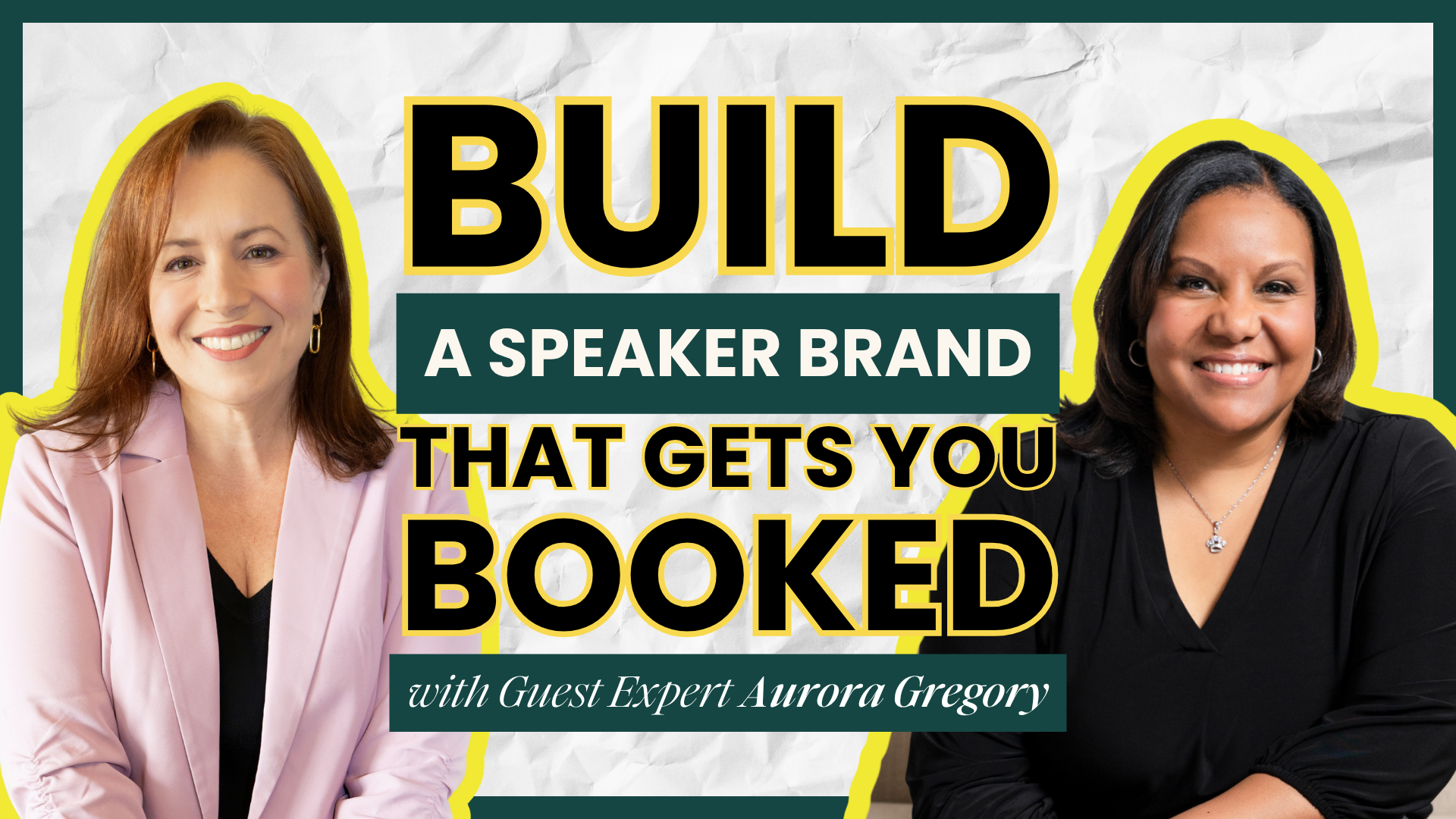
In the latest episode of The Sticky Note Marketing Show, host Mary Czarnecki sits down with Aurora Gregory, a speaker brand strategist and stage performance coach who has spent nearly 25 years helping experts, entrepreneurs, and authors become unforgettable speakers and land more stages.
Their conversation covers everything from building a speaker brand and getting booked to navigating event planners, negotiating speaker fees, and creating the right materials to position yourself as a speaker.
Here are some of the biggest takeaways from their conversation.
“I appreciate what you've done. Thank you.”
Your Speaker Brand Is Different From Your Business Brand
One of the most important distinctions Aurora makes is between your business brand and your speaker brand.
Your business brand makes a promise to potential customers. You're selling a product, service, or experience and showing people what they can expect when they buy from you.
But when you're speaking, the people in the audience aren't necessarily your customers yet.
Instead, you're selling the transformation and experience your audience will have by listening to you.
That means your speaker pitch needs to answer a different question:
What will change for this audience because they spent 30, 45, or 60 minutes with you?
For event planners, the question isn't simply, "What do you know?" It's "What can you do for my audience?"
That audience-centered promise can help differentiate you from other speakers and give event planners a clearer picture of the experience you're going to create.
Ultimately, you're not just pitching a topic. You're pitching a transformation.
Your Network Can Fast-Track Your Way Onto the Stage
If you're looking for the fastest way to get more speaking opportunities, Aurora recommends starting with something you already have: your network.
Her simple exercise is to create a T-chart.
On one side, list everyone you know who "owns a microphone."
That could include:
Podcasters
Conference organizers
Event hosts
Professional development directors
Corporate leaders
People who regularly organize events
On the other side, list the people you know who know someone who owns a microphone and could potentially introduce you.
Why start here?
Because speaking opportunities are built heavily on relationships and trust. A warm introduction can move much faster than a cold pitch, particularly when an event organizer is taking a chance on bringing a new speaker onto their stage.
That doesn't mean you should abandon cold outreach.
Aurora recommends doing both: use your warm network to create opportunities and build a longer-term cold pipeline at the same time.
Warm relationships can move faster. Colder relationships take time to develop.
If your goal is to get traction, gain experience, and get more stages under your belt, start with the relationships you already have while continuing to cultivate new ones.
Don't Become the Speaker Event Planners Remember for the Wrong Reasons
Getting booked is only part of the job.
Once you've landed the stage, your responsibility is to help create a successful experience for the event, the organizer, and the audience.
Aurora shared a cautionary story about a keynote speaker who went significantly over her allotted time at a professional development event. When she realized she was running out of time, she rushed into a sales offer—something that wasn't appropriate for that particular event.
The bigger lesson?
Know what you've been hired to deliver.
Before accepting a speaking engagement, understand:
How much time you have
What the event expects from you
What the audience needs
What materials you need to provide
What you can and cannot promote
What has worked for the event in the past
What the event planner specifically wants from your presentation
Aurora also recommends asking questions during the negotiation process, including:
"What's worked well with other speakers?"
"What hasn't worked?"
"What are you comfortable with?"
The goal is to avoid becoming the speaker an event planner remembers because you made their job harder.
Instead, approach the relationship as a partnership.
As Aurora puts it, you're there to link arms with the event planner and work together to create an amazing experience for the audience.
Your Job Is to Make the Event Planner Look Good
A great speaker doesn't simply show up, deliver a presentation, and leave.
You're also helping the person who hired you succeed.
That means understanding what they're trying to accomplish and aligning your content and delivery with those goals.
Maybe the event planner wants the audience to feel motivated and inspired.
Maybe they want attendees to leave with a practical toolkit.
Maybe they want participants to learn one specific skill they can immediately apply.
Whatever the desired outcome, that's part of the transformation you're being hired to deliver.
When you understand that, your role changes from simply "giving a talk" to becoming a partner in the success of the event.
And that mindset can have a major impact on your relationship with the organizer—and whether they want to invite you back.
Don't Treat a Limited Budget as an Automatic "No"
What happens when an organization says they don't have the budget for your speaking fee?
Aurora's advice: get curious and get creative.
Rather than immediately treating the conversation as a yes-or-no decision, look for other ways you can solve the organization's problem.
Depending on the situation, alternatives might include:
A virtual session instead of an in-person event
Licensing prerecorded content
Providing books and workbooks
A smaller workshop
One-on-one coaching for a smaller group
A different format that fits their available budget
Your time and expertise have value, so you don't have to give your work away for free.
But you can think creatively about what you can offer within the constraints they have.
Most importantly, think about these possibilities before you get on the negotiation call.
If someone tells you their budget is lower than expected, you don't want to be scrambling to figure out what you can offer. Anticipating those scenarios allows you to respond confidently and keep the conversation moving.
Start With a Speaker One-Sheet
If you're wondering whether you need a website, speaker reel, one-pager, or an entire speaker brand, Aurora recommends starting with a speaker one-sheet.
Why?
Because it serves two purposes.
First, it's a professional way to introduce yourself to an event planner or follow up after a conversation about speaking.
Second, creating the one-sheet forces you to clarify your speaker brand.
You have to think about:
Who you are as a speaker
What you speak about
Who you speak to
The value you provide
The transformation you create
Why an event planner should choose you
Aurora has created a free One-Sheet Wonder Checklist to help speakers create their one-sheet and speaker webpage. It also includes a Canva template to make getting started easier.
Speaking Is a Powerful Marketing Tool
For people who are just beginning to explore speaking, Aurora has an important reminder: speaking can be one of the most efficient marketing tools available.
Whether someone attends your live presentation, joins your virtual session, or listens to you on a podcast, they've made a decision to spend time with you.
That's a powerful form of audience engagement.
For experienced speakers, the next step is to become more strategic.
Instead of simply asking, "How can I get more speaking gigs?", start asking:
"What is my speaker brand?"
"What promise am I making to an audience?"
"What transformation am I delivering?"
Your speaker brand should work alongside your business brand—but it should also be distinct enough to help you stand out in a crowded speaking market.
Ready to Build Your Speaker Brand?
Whether you're thinking about speaking for the first time or you've already delivered several talks, this episode is packed with practical advice to help you approach speaking more strategically.
From leveraging your network and understanding event planners to creating a compelling speaker brand and preparing your one-sheet, there are plenty of sticky-note-worthy ideas to put into action.
So, where are you on your speaker journey?
On a scale of 1–5, are you staying behind the scenes—or are you ready to build your speaker brand and get on more stages?
Grab your sticky notes, listen to the full episode, and start putting these ideas into action.